Call UsCall Us : 08071930855
Change Language
Nickel Metal SOFC Anode Ink - 50 grams

Nickel Metal SOFC Anode Ink - 50 grams

Nickel Metal SOFC Anode Ink - 50 grams Specification

  • Hardness
  • Approx. 40 HV (Nickel metal core)
  • Purity
  • 99.99% (Metal basis)
  • Strength
  • Medium/Tough (suited for SOFC applications)
  • Product Type
  • SOFC Anode Ink (50 grams)
  • Material
  • Nickel (Ni) based anode ink
  • Alloy
  • Nickel metal only (no alloying elements)
  • Shape
  • Paste/Ink
  • Moisture
  • <0.5% (as supplied)
  • Chemical Composition
  • Nickel (Ni), organic binder, solvent, trace additives
  • Application
  • Anode fabrication for Solid Oxide Fuel Cells (SOFC), screen printing, tape casting, brush painting
  • Dimension (L*W*H)
  • Custom solution, individual 50 g bottle or jar
  • Color
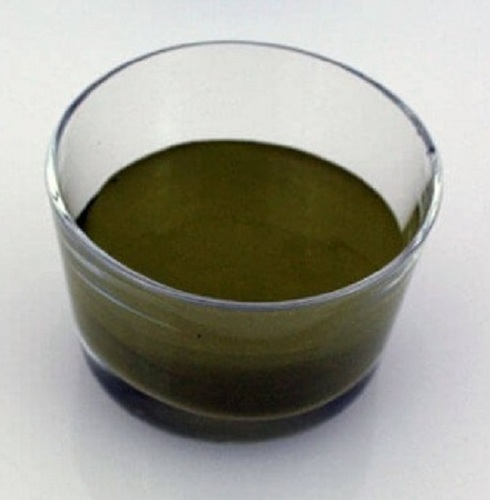
  • Greyish-black
 

Nickel Metal SOFC Anode Ink - 50 grams Trade Information

  • Payment Terms
  • Paypal
  • Delivery Time
  • 15 Days
  • Main Export Market(s)
  • Asia
  • Main Domestic Market
  • All India
 

About Nickel Metal SOFC Anode Ink - 50 grams

NickelMetal SOFC Anode Ink - 50 grams

Product Code: 6201626

NickelMetal Anode Ink is an excellent contact paste for Solid Oxide Fuel Cell (SOFC)testing, and is especially good for enhancing the electrical contact on theanode side of a cell during fuel cell testing. The nickel ink can also be usedas a reference electrode, but any electrical testing with the nickel paste willrequire that the sample be under a reducing gas to maintain good electricalconductivity.

Technical Specifications:

  • Metal: Nickel (Ni)
  • Quantity: 50 grams
  • Solids Loading: 75 - 80% Nickel Metal by weight

 Typical Use Guidelines:

This is a great inkfor making electrical connections for electro chemical testing of fuel cells,ceramic substrates, electrochemical materials, and metals. This ink can also beused to form the anode catalyst layers with proper modifications (such as afteradding the YSZ in order to form ionic pathways within the anode catalyststructure, etc.).

Stirring the ink before use is highly recommended. For best results, the inkshould be stirred with a spatula or a glass rod to achieve an even consistencyprior to use.

This ink is typically fired at 1300 °C for 1 hour to ensure adhesion prior totesting at the desired test temperature (for making the catalyst layers withgood bonding to the electrolyte).

This ink is typically fired at 750°C or 850°C for 1 hour to ensure adhesionprior to testing at the desired test temperature (for making electricalconnections to the current collector screens or current collector wires).

This ink can be used for screen printing for generating electrical connectionsfor wire attachments.


Versatile and Effective SOFC Anode Solution

Formulated specifically for modern SOFC manufacturing, this nickel metal ink combines stable rheology with excellent adhesion on various electrolyte supports. Its proprietary binder system ensures homogenous deposition and robust mechanical integrity upon sintering, while the ultra-fine particle size enhances electrical performance. Ideal for research, prototyping, or commercial-scale production, this ink streamlines the anode fabrication process for advanced fuel cell development.


Safe Handling and Long-Term Storage

Manufactured in the United States, this product is non-toxic and emits no hazardous fumes during normal use. It offers a 12-month shelf life, provided it is stored in a sealed, dry container at temperatures between 5C and 25C. Its stability and easy clean-up, owing to its water/alcohol solvent mixture, make it a practical choice for laboratories and industrial settings alike.

FAQ's of Nickel Metal SOFC Anode Ink - 50 grams:


Q: How should Nickel Metal SOFC Anode Ink be applied to electrolyte substrates?

A: The ink can be applied by screen printing, tape casting, or brush painting directly onto compatible SOFC electrolyte supports such as YSZ or GDC. Proper mixing before use is recommended to maintain uniformity.

Q: What is the recommended sintering process for this anode ink?

A: After depositing the ink onto the substrate, it should be dried and then sintered at temperatures between 1200C and 1400C to achieve optimal physical and electrochemical properties for SOFC anodes.

Q: What are the advantages of using this proprietary organic binder system?

A: The proprietary binder ensures even dispersion of nickel particles, promotes strong mechanical integrity of the anode layer after firing, and allows for precise patterning, resulting in durable and high-performing SOFC electrodes.

Q: When does the Nickel Metal SOFC Anode Ink expire, and how should it be stored?

A: The ink has a shelf life of 12 months from the date of manufacture if kept sealed in a cool, dry, airtight container at a temperature between 5C and 25C. Correct storage preserves viscosity and prevents moisture absorption.

Q: Is this anode ink safe to use and does it release hazardous fumes during processing?

A: Yes, the ink is non-toxic and does not evolve hazardous fumes under standard application and sintering conditions, making it suitable for laboratory and industrial environments.

Q: Where can the Nickel Metal SOFC Anode Ink be sourced or purchased?

A: This ink is available through distributors, manufacturers, retailers, suppliers, and traders, with primary availability in the United States. Custom solutions and packaging can be provided upon request.

Tell us about your requirement
product

Price:

Quantity
Select Unit

  • 50
  • 100
  • 200
  • 250
  • 500
  • 1000+
Additional detail
Mobile number

Email

More Products in Solid Oxide Fuel Cell Components Category

Yttria-Stabilized Zirconia (8 mole %)  Nanopowder

Yttria-Stabilized Zirconia (8 mole %) Nanopowder

Material : YttriaStabilized Zirconia

Strength : High fracture toughness

Application : Other, Thermal barrier coatings, Solid oxide fuel cells, Dental ceramics, Oxygen sensors

Moisture : <0.1%

Purity : 99.99%

Chemical Composition : ZrO : 9192%; YO : 8 mole%

Scandia Ceria Stabilized Zirconia (10% Sc, 1% Ce) Powder

Scandia Ceria Stabilized Zirconia (10% Sc, 1% Ce) Powder

Material : Zirconium oxide stabilized with scandium oxide and cerium oxide

Strength : 800 MPa (Flexural Strength, approx)

Application : Other, Solid oxide fuel cells (SOFC), oxygen sensors, thermal barrier coatings, electronic ceramics.
Moisture : <0.5%

Purity : 99.9% (metals basis)

Chemical Composition : ZrO2 + 10 mol% Sc2O3 + 1 mol% CeO2

Nickel Oxide Standard Grade Anode Powder

Nickel Oxide Standard Grade Anode Powder

Material : Nickel Oxide

Strength : Excellent

Application : Other, Electroplating, Battery Manufacturing, Ceramics

Moisture : < 0.5%

Purity : 99% min

Chemical Composition : NiO, trace impurities

Lanthanum Strontium Cobalt Ferrite Cathode Powder

Lanthanum Strontium Cobalt Ferrite Cathode Powder

Material : Lanthanum Strontium Cobaltite Ferrite

Strength : Not Applicable (Powder Form)

Application : Other, SOFC (Solid Oxide Fuel Cell) cathode materials, electrocatalysis, sensors

Moisture : <0.5%

Purity : 99.9% (High Purity Grade)

Chemical Composition : La0.6Sr0.4CoO3 (Lanthanum Strontium Cobalt Ferrite)