 Call Us : 08071781050


|
Brand: Solvay Specialty Polymers USA
Product Code: 72700000
Aquivionmembrane is used to separate the anode and cathode compartment of protonexchange membrane fuel cells (PEMFCs) and water electrolyzers, separators forelectrochemical hydrogen pumps or redox flow batteries, and pervaporation orgas humidification systems. Various other electrochemical technologies can alsobenefit from Aquivion membranes. Aquivion E87-05S membrane has a nominalthickness of 50 micrometers ( 2 mil), which makes it suitable forunpressurized or low-pressure H2/Air PEMFCs, unpressurized or low-pressureH2/O2 PEMFCs, unpressurized water electrolyzers, unpressurized or low-pressurehydrogen pumps, atmospheric pressure redox flow batteries, atmospheric or lowpressure pervaporation or gas humidification systems, etc. Direct methanol fuelcells (DMFCs), direct ethanol fuel cells (DEFCs), and various other alcohol basedfuel cells can also benefit greatly from this cation exchange membrane.
SolvayAquivion E87-05S is a perfluorosulfonic acid (PFSA) ionomer membrane thatexhibits an equivalent weight (EW) of 870 g/eq. Aquivion PFSA ionomermembranes are melt-extruded products based on the unique Short Side Chaincopolymer of Tetrafluoroethylene (TFE) and Sulfonyl Fluoride Vinyl Ether (SFVE)F2C=CF-O-CF2CF2-SO2F produced by Solvay. This membrane is available in the acidform (H+) and features a lower EW than most commercial proton exchangemembranes or cation exchange membranes. The unique Short Side Chaincopolymer allows higher crystallinity, improved mechanical properties, andbetter proton conductivity. Aquivion E87-05S membrane is anon-reinforced membrane based on the chemically stabilized Solvay PFSA ionomer,which exhibit substantially lower fluoride ion release compared to thenon-stabilized polymer a sign of improved chemical durability. Chemicalstabilization process is also known as end group conversion in which a largeamount of polymer end groups are converted to their inert "CF3"configuration, and as such provides excellent lifetime. Aquivion membranes are also manufactured in the standard form without thechemical stabilization. The polymer is chemically resistant and durablefor various electrochemical and non-electrochemical applications.
Key Advantages:
Very high concentration of functional groupsfor strong proton (or Na+, K+, Li+, etc.) conductivity
High softening point for high temperature operation well above 80 C
Strong water retention for better fuel cell operation at low-humidityconditions
Comparison of Short Side Chain (SSC)and Long Side Chain (LSC) PFSA Membranes:
Aquivion PFSAs shorter side chain makesit possible to achieve either better mechanical properties at the same IEC(ion-exchange capacity) or a higher ion exchange capacity (IEC) at the samemechanical properties than long side chain polymers (LSC). The side chaincomparison of Short Side Chain (SSC) and Long Side Chain (LSC) PFSA membranesfrom a chemical composition is provided below.

Price:
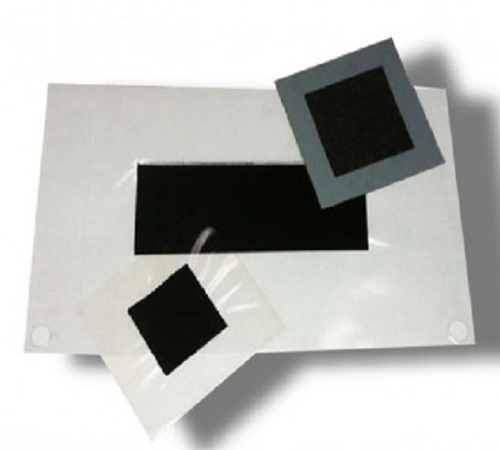
Chemical Composition : Perfluorosulfonic acid membrane (Dyneon 725) with platinum catalyst (0.5 mg/cm) supported on carbon cloth
Shape : Sheet/Cloth
Density : 2.0 Gram per cubic centimeter(g/cm3)
Material : PEM (Proton Exchange Membrane) with Dyneon 725 and platinum catalyst on cloth backing
Application : Proton Exchange Membrane Fuel Cells (PEMFC), Hydrogen Electrolyzers, Electrochemical cells
Hardness : Soft, flexible membrane

Chemical Composition : Polypropylene homopolymer (C3H6)n
Shape : Mesh/Grid
Density : 0.90 Gram per cubic centimeter(g/cm3)
Material : Polypropylene
Application : Turbulence promoter for filter cartridges, cooling towers, water treatment systems, and chemical processing applications
Hardness : Shore D 78
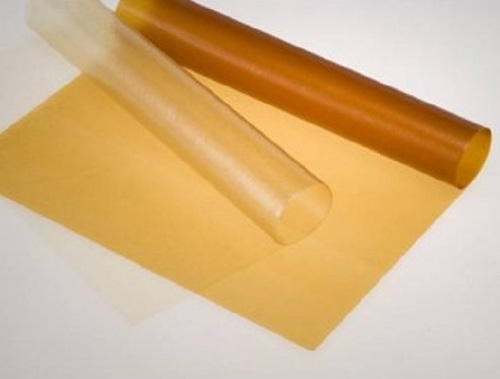
Chemical Composition : Poly(aryl piperidinium) based anion exchange polymer
Shape : Flat Sheet, Membrane
Density : 1.8 Gram per cubic centimeter(g/cm3)
Material : Sustainion X3750 Grade RT Anion Exchange Membrane
Application : Electrochemical applications such as CO2 electrolyzers, water electrolysis, fuel cells, and flow batteries
Hardness : Flexible (membrane, not specified in Shore scale)
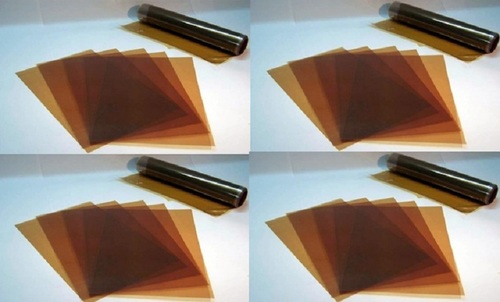
Chemical Composition : Functionalised aromatic polymer with quaternary ammonium groups on PET support
Shape : Flat sheet membrane
Density : 1.05 Gram per cubic centimeter(g/cm3)
Material : Perfluorinated polymer with PET support
Application : Electrodialysis, fuel cells, water electrolyzers, and electrochemical devices
Hardness : Flexible
 |
ULTRANANOTECH PRIVATE LIMITED
All Rights Reserved.(Terms of Use) Developed and Managed by Infocom Network Private Limited. |




 Send Inquiry

 Send Inquiry
 Send Inquiry
 Send SMS