Call UsCall Us : 08071930855
Change Language
Aquivion PW79S
Aquivion PW79S

Aquivion PW79S

Aquivion PW79S Specification

  • Material
  • Perfluorosulfonic Acid (PFSA) Ionomer
  • Application
  • Proton Exchange Membranes, Fuel Cells, Electrolysis, Chlor-alkali Applications
  • Chemical Composition
  • Equivalent Weight (EW) 790 g/eq, Sulfonic Acid Groups
  • Shape
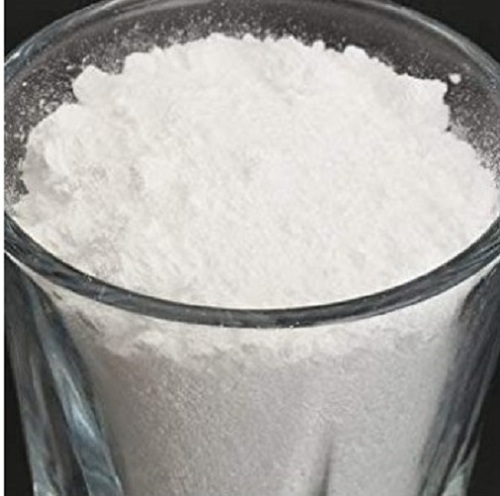
  • Granular Powder
  • Hardness
  • Not Applicable (Powder form)
  • Density
  • 2.0 Gram per cubic centimeter(g/cm3)
 

Aquivion PW79S Trade Information

  • Payment Terms
  • Paypal
  • Delivery Time
  • 15 Days
  • Main Export Market(s)
  • Asia
  • Main Domestic Market
  • All India
 

About Aquivion PW79S

Product Code: 72800020

AquivionPW79S coarse, acid powder is based on the short-side-chain (SSC) copolymer ofTetrafluoroethylene and the Sulfonyl Fluoride Vinyl Ether (SFVE)CF2=CF-O-(CF2)2-SO2F produced by Solvay. The resulting perfluoropolymer'sfunctional groups are in their sulfonic acid form, SO3H. Aquivion PW79S ischemically-stabilized (denoted by the S-suffix).  Chemicalstabilization process is also known as end group conversion in which a largeamount of polymer end groups are converted to their inert "CF3"configuration, and as such provides excellent lifetime. Chemically stabilizedPFSA powders would exhibit substantially lower fluoride ion release compared tothe non-stabilized polymer a sign of improved chemicaldurability.  

AquivionPW79S is characterized by a low equivalent weight (770 to 810 g/eq) and a highionic exchange capacity. The total acid capacity for Aquivion PW79S is1.23 to 1.30 meq/g.  It can be used as is under conditions whereconventional exchange resins have shown insufficient chemical resistance.

Dueto its superacid functionality with many active groups, it can be used eitherdirectly or as an ingredient of composite structures active as a heterogeneouscatalyst. This encompasses a wide range of organic syntheses and respectivereaction mechanisms. It is insoluble in water, acid or bases and in mostsolvents unless extreme conditions are applied. 

AquivionPW79S can be dissolved in some organic solvents to produce ion exchage capacitymembrane. Proper organic solvents are dipolar aprotic such as N-ethyl-2-pyrrolidone(NEP) and dimethyl sulfoxide. To facilitate the dissolution, slightly increasethe temperature to 50-60C.

Key Advantages of Aquivion's Short SideChain Based PFSA Powders:

Very highconcentration of functional groups for strong proton (or Na+, K+, Li+, etc.)conductivity
High softening point for high temperature operation well above 80 C
Strong water retention for better fuel cell operation at low-humidityconditions


Comparison of Short Side Chain and LongSide Chain PFSA Powders:

Aquivion PFSAs short side chain powder products makeit possible to achieve either better mechanical properties at the same IEC(ion-exchange capacity) or a higher IEC at the same mechanical properties thanlong side chain (LSC) based PFSA powder.


Advanced Performance for Clean Energy Innovations

Aquivion PW79S delivers exceptional ionic conductivity and thermal endurance, making it a preferred choice in proton exchange membranes for fuel cells and electrolyzers. Its pure white granular form ensures easy processing, while its chemically resilient PFSA structure withstands demanding operational conditions. The heightened water uptake amplifies its proton conduction, driving efficiency in various electrochemical devices.


Versatility Across Industrial Applications

Engineered for diverse sectors, Aquivion PW79S adapts effectively to fuel cells, electrolysis systems, and the chlor-alkali industry. Its fine particle size and robust chemical composition provide flexibility for both research and large-scale operations. Whether in innovative clean energy projects or established chemical processes, its stability and performance foster reliable, long-term results.

FAQ's of Aquivion PW79S:


Q: How is Aquivion PW79S typically used in fuel cell and membrane applications?

A: Aquivion PW79S is integrated into the fabrication of proton exchange membranes and catalyst layers, serving as either a binder or the ionic conductor in fuel cells, water electrolyzers, and chlor-alkali cells due to its high ionic conductivity and excellent chemical stability.

Q: What are the main benefits of using Aquivion PW79S in electrochemical systems?

A: The material's superior ionic conductivity and thermal stability enable high efficiency and durability in fuel cells and electrolyzers. Its high water uptake enhances proton transport, improving device performance in demanding industrial and research environments.

Q: Where is Aquivion PW79S typically available for purchase?

A: Aquivion PW79S can be sourced from authorized distributors, manufacturers, retailers, suppliers, or traders across the United States, ensuring prompt availability for both research and industrial clients.

Q: What is the process for incorporating Aquivion PW79S into membrane fabrication?

A: Typically, Aquivion PW79S powder is dispersed in appropriate solvents to form a homogenous mixture. This solution can then be cast or coated onto substrates, or used in conjunction with other components to create high-performance ion-conducting membranes.

Q: When should Aquivion PW79S be chosen over other PFSA ionomers?

A: Choose Aquivion PW79S when high ionic conductivity, enhanced water uptake, and thermal resilience are required-particularly in applications operating at elevated temperatures or varying humidity, such as advanced fuel cells and electrolyzers.

Q: What distinguishes Aquivion PW79S from similar products?

A: Its combination of fine particle size (<45 m), robust chemical structure, high water uptake, and excellent ionic conductivity at typical operational conditions sets it apart as a versatile and reliable choice for demanding proton exchange applications.

Tell us about your requirement
product

Price:

Quantity
Select Unit

  • 50
  • 100
  • 200
  • 250
  • 500
  • 1000+
Additional detail
Mobile number

Email

More Products in Fuel Cell Membranes Category

Aquivion E98-15S

Aquivion E98-15S

Shape : Membrane sheet

Chemical Composition : Equivalent weight 980 g/eq. (E98 series), Sulfonic acidfunctionalized tetrafluoroethylenebased fluoropolymer

Material : Perfluorosulfonic Acid (PFSA) ionomer membrane

Application : Fuel cells, electrolyzers, electrochemical applications

Density : 2.1 Gram per cubic centimeter(g/cm3)

Hardness : Not specified (flexible solid film)

Nafion    R-1000 Precursor Beads

Nafion R-1000 Precursor Beads

Shape : Spherical beads

Chemical Composition : Polytetrafluoroethylene (PTFE) backbone with perfluorosulfonyl fluoride side chains

Material : Perfluorosulfonic acid/PTFE copolymer precursor

Application : Used as a precursor for manufacturing Nafion membranes and films via extrusion or casting; also for research and industrial ionexchange processes

Density : 2.1 Gram per cubic centimeter(g/cm3)

Hardness : High mechanical strength, typical for PTFE polymers

Sustainion X37-FA

Sustainion X37-FA

Shape : Flat Sheet Membrane

Chemical Composition : Quaternized Poly(phenylene) with Reinforcement

Material : Polymer Electrolyte Membrane (PEM)

Application : Electrochemical Devices, Alkaline Water Electrolysis, CO2 Electrolysis, Fuel Cells

Hardness : Flexible

Fumasep FAA-3-20

Fumasep FAA-3-20

Shape : Flat Sheet / Membrane

Chemical Composition : Fluorinated polymer backbone with quaternary ammonium functional groups

Material : Polymer Blend (Anion Exchange Membrane)

Application : Fuel Cells, Electrolyzers, Redox Flow Batteries, Electrodialysis

Density : 0.95 Gram per cubic centimeter(g/cm3)