 Call Us : 08071781050


|
Product Code:72500602
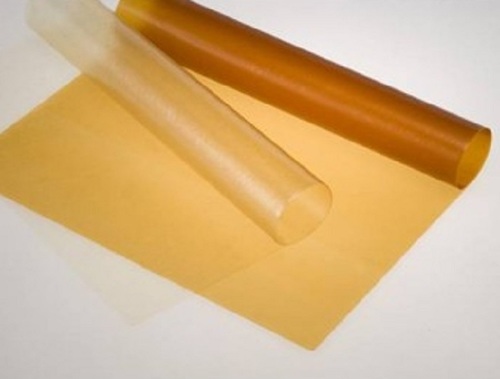
SustainionX37-FA Anion Exchange Membrane has a dry thickness of 50 microns. They aremoderately basic and designed for use with supporting electrolyte. These arespecial membranes with lower crossover, which show superior performance in ourelectrolyzer to convert CO2 to formic acid.
Note:these membranes can be used in a room temperature formic acid electrolyzer afteractivation.
Pleasenote that this membrane is currently only available in 23 cm x 28 cm sheets.
AnionConductivity of Sustainion X37 in Different Electrolytes
Anionconductivity of Sustainion X37 membrane for hydroxide ions, carbonate ions, andchloride ions are provided in the graph below.
PretreatmentInstructions:
For electrochemical CO2reductionapplications, the anion exchange membrane should be converted to the carbonateor bicarbonate form by treating the membrane initially with 0.1 to 0.5 M KOH orNaOH solution and then with 0.1 to 0.5 M water soluble carbonate or bicarbonatesalt solutions (such as potassium carbonate or potassium bicarbonate that isdissolved in de-ionized water or distilled water). Fully submerging theanion exchange membrane into KOH or NaOH solution for 6 to 12 hours and then tothe desired carbonate or bicarbonate salt solution for a period of 48-72 hourswould be sufficient to fully convert the membrane into either carbonate orbicarbonate form. After rinsing the membrane (which is in the carbonateform) with deionized water or distilled water, it can be assembled inside theelectrochemical setup for electrochemical CO2reduction experiments. Whilethe submersion of the membrane into the KOH or NaOH can be skipped, for suchsituations, a longer submersion time may be required in order to fully convertthe membrane to carbonate or bicarbonate form. Initial conversion toOH-form significantly improves the carbonate ion exchange process due toexpanded pore sizes.

Price:
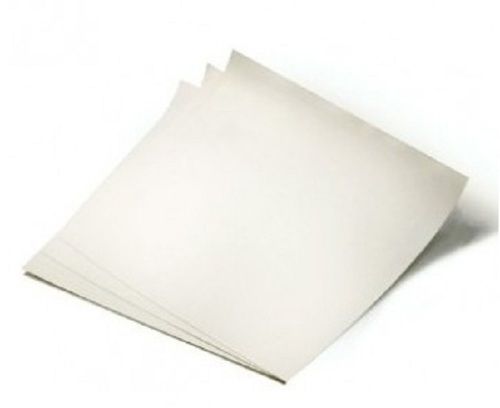
Material : Microporous Polyethylene
Application : Filtration, Venting, Wicking, Fluid Control
Shape : Sheet
Density : 0.6 Gram per cubic centimeter(g/cm3)
Chemical Composition : High Density Polyethylene (HDPE)
Hardness : Shore D 4560

Material : Polypropylene
Application : Turbulence promoter for filter cartridges, cooling towers, water treatment systems, and chemical processing applications
Shape : Mesh/Grid
Density : 0.90 Gram per cubic centimeter(g/cm3)
Chemical Composition : Polypropylene homopolymer (C3H6)n
Hardness : Shore D 78
Material : Perfluorosulfonic acid (PFSA) membrane
Application : Electrochemical cell testing, Fuel cells, Electrolysis systems, Research and development
Shape : Sheet
Density : 2.0 Gram per cubic centimeter(g/cm3)
Chemical Composition : Perfluorosulfonic acid polymer
Hardness : Medium
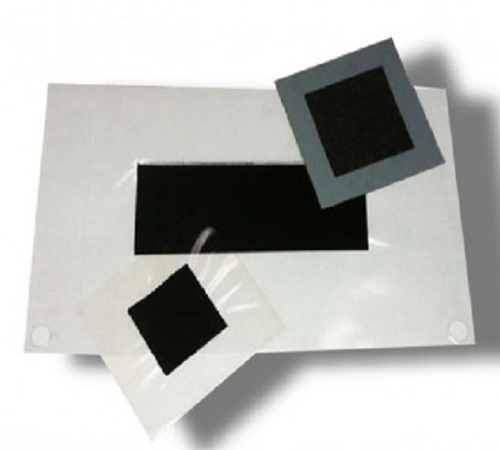
Material : PEM (Proton Exchange Membrane) with Dyneon 725 and platinum catalyst on cloth backing
Application : Proton Exchange Membrane Fuel Cells (PEMFC), Hydrogen Electrolyzers, Electrochemical cells
Shape : Sheet/Cloth
Density : 2.0 Gram per cubic centimeter(g/cm3)
Chemical Composition : Perfluorosulfonic acid membrane (Dyneon 725) with platinum catalyst (0.5 mg/cm) supported on carbon cloth
Hardness : Soft, flexible membrane
 |
ULTRANANOTECH PRIVATE LIMITED
All Rights Reserved.(Terms of Use) Developed and Managed by Infocom Network Private Limited. |




 Send Inquiry

 Send Inquiry
 Send Inquiry
 Send SMS