 Call Us : 08071781050


|
Product Code: 72600070-2
The Xergy Pention-AEM-272-05 membrane is a composite AEMthat uses the poly(norbornene) based resin and has an ion exchange capacity of3.4 to 3.6 mequiv/g. Pention anion exchange membranes offer excellentmechanical strength and stability to a wide variety of chemistries. Theseparticular AEMs depending on their thickness and crosslinking degree havedemonstrated up to 9 A/cm2 current densities (or >3 W/cm2 power densities)in alkaline fuel cells with excellent durability and lifetime [based on therecent jointly conducted study between NREL,University of South Carolina, and Georgia Institute of Technology]. Thestated electrochemical performance data is for reference only and depending onthe MEA, CCM or GDE manufacturing method, used membrane thickness, testinghardware design and components used in the test hardware, and operationalparameters (temperature, pressure, reactant flow rates, etc.), those values mayor may not be attained. Xergy currently produces Composite Pention anionexchange membrane sheets in 5, 10, 20, and 30m thicknesses and 5x5cm, 10x10cm,and 15x15cm sizes. Image on the right side shows the chemical composition ofthe anion exchange resin used to manufacture Xion Composite Pention membranes.
The Xion Composite Pention-AEM-72-05 is a 5micrometers thick anion exchange membrane and it can be used in fuel cells,electrolyzers, electrodialysis, redox flow batteries, electrochemicalcompressors, and a wide variety of other devices. Composite Pention AEMs arecurrently offered with 5% or 15% crosslinking levels.
XION Composite PENTION Membranes are ultra-thin,ultra-strong, and provide ultra-high performance while demonstrating highlystable performance as reinforced anion exchange membranes (AEM). Theionomer structure contains a poly(norbornene) backbone with quaternary ammoniumfunctional groups. A reinforcement layer is integrated into the structureof the membrane to provide enhanced mechanical properties. The enhancedmechanical properties as free-standing membranes, providing higher ionicconductance without sacrificing strength.
Benefits of XionComposite Pention AEMs:
-High anionic conductivity
-Great chemical stability at low and high temperatures
-Ultra-thin membranes with excellent mechanical strength
Pre-treatment protocol:
Composite Pention membranes are shipped in the bromide orchloride forms.
For standard alkaline fuel cell / electrolysisapplications, the membrane should be converted into OH-form by treating it with0.5 1.0 M NaOH or KOH solution: Put the membrane sample in an aqueoussolution of 0.5 1.0 M NaOH or KOH for at least 24 h at 20C 30C. Afterrinsing with demineralised water (pH ~ 7) the membrane is ready to use. Useclosed container to avoid CO2 contamination (carbonate formation that mayaffect conductivity). The membrane in OH-form must be stored under wet /humidified and CO2-free conditions, avoid drying out of the membrane inOH-form. Long-term storage in dry conditions should be preferably done incarbonate, Cl- or Br- form.
For otherelectrochemical (electrodialysis, desalination, electro-electrodialysis,reverse electrodialysis, acid recovery, salt splitting, etc.) andnon-electrochemical applications, the membrane should be converted into theanionic form that is relevant for the intended application. For example,if the application is requiring the Cl- anions to be transferred through themembrane, then this anion exchange membrane needs to be converted into the Cl-form. In order to convert this membrane into Cl- form, it needs to besubmerged into a 1-2 M salt solution of NaCl or KCl (dissolved in deionizedwater) for a period of 24-72 hours and then rinsed with deionized water toremove the excess salt from the membrane surface. Or if the intendedapplication is requiring to transfer sulfate anions, then this anion exchangemembrane needs to be converted into the sulfate form prior to its assembly intothe cell. A neutral salt solution of Na2SO4 or K2SO4 wouldusually be sufficient to achieve the full conversion of membrane into thesulfate form after fully submerging the membrane into the salt solution for24-72 hours at room temperature.
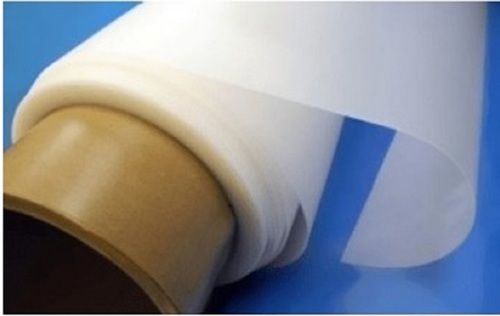

Price:
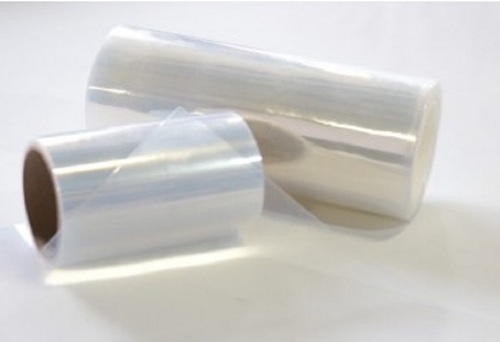
Chemical Composition : Proprietary layered membrane structure with cation and anion exchange layers
Material : Advanced polymer blend with ionselective properties
Density : 1.1 Gram per cubic centimeter(g/cm3)
Application : Electrodialysis, electrolysis, redox flow batteries, acid and base generation
Shape : Flat sheet membrane
Hardness : Flexible, nonrigid
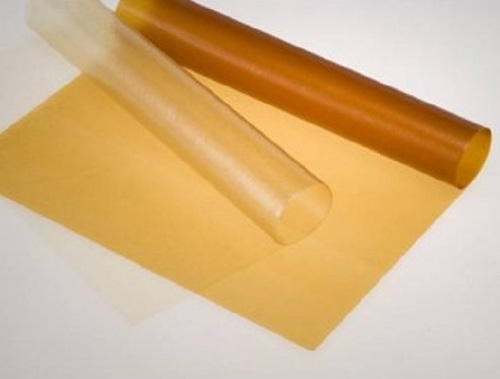
Chemical Composition : Poly(aryl piperidinium) based anion exchange polymer
Material : Sustainion X3750 Grade RT Anion Exchange Membrane
Density : 1.8 Gram per cubic centimeter(g/cm3)
Application : Electrochemical applications such as CO2 electrolyzers, water electrolysis, fuel cells, and flow batteries
Shape : Flat Sheet, Membrane
Hardness : Flexible (membrane, not specified in Shore scale)
Chemical Composition : Perfluorosulfonic acid polymer
Material : Perfluorosulfonic acid (PFSA) membrane
Density : 2.0 Gram per cubic centimeter(g/cm3)
Application : Electrochemical cell testing, Fuel cells, Electrolysis systems, Research and development
Shape : Sheet
Hardness : Medium

Chemical Composition : Polypropylene homopolymer (C3H6)n
Material : Polypropylene
Density : 0.90 Gram per cubic centimeter(g/cm3)
Application : Turbulence promoter for filter cartridges, cooling towers, water treatment systems, and chemical processing applications
Shape : Mesh/Grid
Hardness : Shore D 78
 |
ULTRANANOTECH PRIVATE LIMITED
All Rights Reserved.(Terms of Use) Developed and Managed by Infocom Network Private Limited. |




 Send Inquiry

 Send Inquiry
 Send Inquiry
 Send SMS
 Call Me Free