Call UsCall Us : 08071781050
Change Language
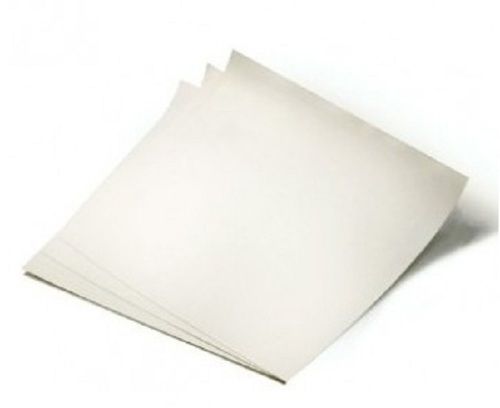
Xion PEM-Aquivion-830-20

Xion PEM-Aquivion-830-20

Xion PEM-Aquivion-830-20 Specification

  • Material
  • Perfluorosulfonic Acid (PFSA) ionomer membrane
  • Application
  • Polymer Electrolyte Membrane for Fuel Cells and Electrolyzers
  • Chemical Composition
  • Equivalent to Aquivion® E830; Perfluorinated copolymer with sulfonic acid functional groups
  • Shape
  • Flat Sheet Membrane
  • Density
  • 2.1 Gram per cubic centimeter(g/cm3)
  • Ionic Conductivity
  • >0.06 S/cm (at 80°C, fully hydrated)
  • Proton Conductivity
  • High
  • Color
  • Transparent
  • Format
  • Rolls or sheets
  • Operating Temperature Range
  • Up to 90°C
  • Reinforcement
  • Non-reinforced
  • Surface Finish
  • Smooth
  • Storage Condition
  • Store in a dry, cool place; avoid sunlight
  • Water Uptake
  • ~20% wt (at room temperature)
  • Thickness
  • 20 µm
  • Type
  • Hydrocarbon PEM membrane
  • Exchange Capacity
  • 0.83 meq/g dry
 

Xion PEM-Aquivion-830-20 Trade Information

  • Payment Terms
  • Paypal
  • Delivery Time
  • 15 Days
  • Main Export Market(s)
  • Asia
  • Main Domestic Market
  • All India
 

Xion PEM-Aquivion-830-20 About

XionPEM-Aquivion-830-20

Product Code: 72600103-2

TheXion Composite PEM-Aquivion-830-20 is a 20 micrometers thick composite protonexchange membrane that uses the Aquivion resin with an equivalent weight of830. It is stable under acidic and neutral conditions. This membrane can beused in fuel cells, electrolyzers, electrodialysis, redox flow batteries,electrochemical compressors, sensors, and a wide variety of other devices. AllXion membranes have high selectivity, high chemical resistance, and durability.Image on the right side shows the chemical composition of the Aquivion resin.

TheXion Composite PEM-Aquivion-830-20 is a reinforced composite ion exchangemembrane that provides excellent mechanical strength and stability to a widevariety of ionomer chemistries.  The mechanical reinforcement is themicroporous expanded PTFE matrix, which has excellent thermal, chemical, andmechanical stability under various conditions.

XionComposite Aquivion membranes are ultra-thin, highly conductive, and highlystable reinforced proton exchange membranes (PEM). The membranes are based on aperfluorosulfonic acid (PFSA) ionomer developed by Solvay. The Aquivionionomer produced by Solvay has much shorter side chains than traditional PFSApolymers, providing different ionomer morphology and therefore enhancedphysical and chemical properties. A reinforcement layer is integrated intothe structure of the membrane to provide enhanced mechanical properties. Theenhanced mechanical properties allow Ultra-thin, Ultra-Strong, andUltra-High-Performance free-standing membranes, i.e. providing higher ionicconductivity without sacrificing strength. Xion Composite AquivionMembranes come in two variations based on the equivalent weight (EW) of theionomer: 720EW has higher ionic conductivity, but 830EW has greater stability.


Benefitsof Xion Composite Aquivion Membranes:

High proton or cation conductivity
Great chemical stability at low and high temperatures
Ultra-thin membranes with excellent mechanical


High Performance for Energy Applications

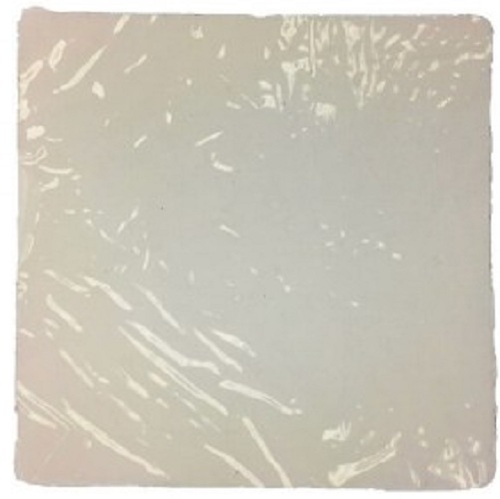
Xion PEM-Aquivion-830-20 is engineered for use in advanced electrochemical cells, such as fuel cells and electrolyzers. Its robust PFSA composition ensures durable proton conduction and stability under demanding conditions. The membrane's flat sheet format and transparent appearance provide ease of inspection and integration into various systems. Suitable for research, industrial, and commercial sectors, it supports efficient energy conversion for sustainable technologies.


Exceptional Physical and Chemical Attributes

With a smooth, non-reinforced surface, this membrane offers reliable performance and compatibility with numerous cell designs. Its exchange capacity, excellent ionic conductivity, and substantial water uptake guarantee a consistent supply of protons, increasing system efficiency. The product's non-reinforced structure provides flexibility during handling and installation, while the recommended storage conditions help maintain long-term functionality.

FAQ's of Xion PEM-Aquivion-830-20:


Q: How should the Xion PEM-Aquivion-830-20 membrane be stored for optimal performance?

A: For best results, store the membrane in a dry, cool place and avoid direct sunlight. Proper storage preserves its proton conductivity, minimizes degradation, and extends product life.

Q: What are the key benefits of using Xion PEM-Aquivion-830-20 in fuel cell systems?

A: Its high proton conductivity, chemical stability, and efficient water uptake enable higher fuel cell efficiency, long-term durability, and reliable operation in energy conversion applications.

Q: When is it recommended to use Xion PEM-Aquivion-830-20 over other PEM membranes?

A: Choose this membrane when your application demands high ionic conductivity, thin profile (20 m), and chemical robustness-particularly in fuel cells or electrolyzers operating up to 90C.

Q: Where can Xion PEM-Aquivion-830-20 be purchased or sourced in the United States?

A: You can obtain this membrane through authorized distributors, manufacturers, retailers, suppliers, or traders specializing in advanced fuel cell and electrolyzer components throughout the United States.

Q: What is the process for integrating Xion PEM-Aquivion-830-20 into an electrochemical cell?

A: The membrane can be readily installed as a flat sheet or cut-to-size from rolls. Its smooth finish simplifies handling and assembly into fuel cell or electrolyzer systems, ensuring consistent proton conduction.

Q: What makes the chemical composition of Xion PEM-Aquivion-830-20 unique?

A: It consists of a perfluorinated copolymer with sulfonic acid functional groups, equivalent to Aquivion E830, delivering superior chemical resistance and efficient ion transport.

Tell us about your requirement
product

Price:

Quantity
Select Unit

  • 50
  • 100
  • 200
  • 250
  • 500
  • 1000+
Additional detail
Mobile number

Email

More Products in Fuel Cell Membranes Category

Porex PM21M

Porex PM21M

Chemical Composition : High Density Polyethylene (HDPE)

Material : Microporous Polyethylene

Shape : Sheet

Application : Filtration, Venting, Wicking, Fluid Control

Density : 0.6 Gram per cubic centimeter(g/cm3)

Hardness : Shore D 4560
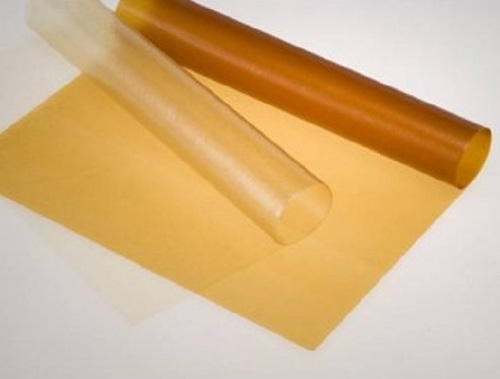
Sustainion X37-50 Grade RT

Sustainion X37-50 Grade RT

Chemical Composition : Poly(aryl piperidinium) based anion exchange polymer

Material : Sustainion X3750 Grade RT Anion Exchange Membrane

Shape : Flat Sheet, Membrane

Application : Electrochemical applications such as CO2 electrolyzers, water electrolysis, fuel cells, and flow batteries

Density : 1.8 Gram per cubic centimeter(g/cm3)

Hardness : Flexible (membrane, not specified in Shore scale)
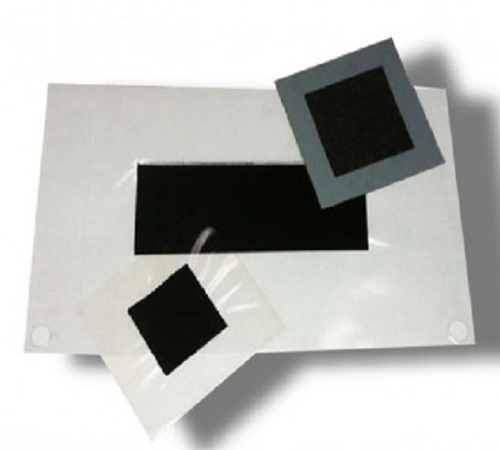
MEA PEM Dyneon 725 05I m 0.5mgPt Cloth

MEA PEM Dyneon 725 05I m 0.5mgPt Cloth

Chemical Composition : Perfluorosulfonic acid membrane (Dyneon 725) with platinum catalyst (0.5 mg/cm) supported on carbon cloth

Material : PEM (Proton Exchange Membrane) with Dyneon 725 and platinum catalyst on cloth backing

Shape : Sheet/Cloth

Application : Proton Exchange Membrane Fuel Cells (PEMFC), Hydrogen Electrolyzers, Electrochemical cells

Density : 2.0 Gram per cubic centimeter(g/cm3)

Hardness : Soft, flexible membrane
PTFE Turbulence Promoter Mesh

PTFE Turbulence Promoter Mesh

Chemical Composition : Polytetrafluoroethylene (PTFE), (C2F4)n

Material : PTFE (Polytetrafluoroethylene)

Shape : Mesh

Application : Used as turbulence promoters in filtration, separation, and purification systems

Density : 2.3 Gram per cubic centimeter(g/cm3)

Hardness : Shore D 5060