Call UsCall Us : 08071930855
Change Language
Lanthanum Strontium Manganite Cathode Ink (LSM20)

Lanthanum Strontium Manganite Cathode Ink (LSM20)

Lanthanum Strontium Manganite Cathode Ink (LSM20) Specification

  • Purity
  • 99.9%
  • Product Type
  • Cathode Ink
  • Material
  • Lanthanum Strontium Manganite (LSM20)
  • Alloy
  • No
  • Shape
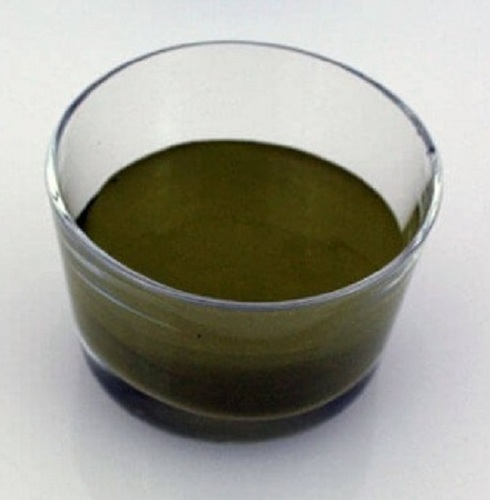
  • Liquid Ink
  • Moisture
  • <1%
  • Chemical Composition
  • La0.8Sr0.2MnO3
  • Application
  • Solid Oxide Fuel Cell (SOFC) Cathode
  • Color
  • Black
  • Electrical Conductivity
  • High (specific value on request)
  • Formulation
  • Ready-to-use paste for screen printing or doctor blade application
  • Thermal Expansion Coefficient
  • ~10.5 x 10 /K
  • Viscosity
  • 3500-4500 cP at 25C
  • Binder Type
  • Organic polymer binder
  • Particle Size
  • <1 m
  • Storage Condition
  • Store in cool, dry place, airtight packaging
  • Purity Confirmation
  • Tested by ICP-OES
  • Recommended Sintering Temperature
  • 1200C - 1400C
  • Shelf Life
  • 6 months from the date of manufacture
  • Packaging
  • 100 g, 250 g, 500 g, customized on request
  • RoHS Compliance
  • Yes
  • Lead (Pb) Content
  • <10 ppm
  • Solvent
  • Terpineol
 

Lanthanum Strontium Manganite Cathode Ink (LSM20) Trade Information

  • Payment Terms
  • Paypal
  • Delivery Time
  • 15 Days
  • Main Export Market(s)
  • Asia
  • Main Domestic Market
  • All India
 

About Lanthanum Strontium Manganite Cathode Ink (LSM20)

LanthanumStrontium Manganite Cathode Ink (LSM20)

Product Code: 6201635

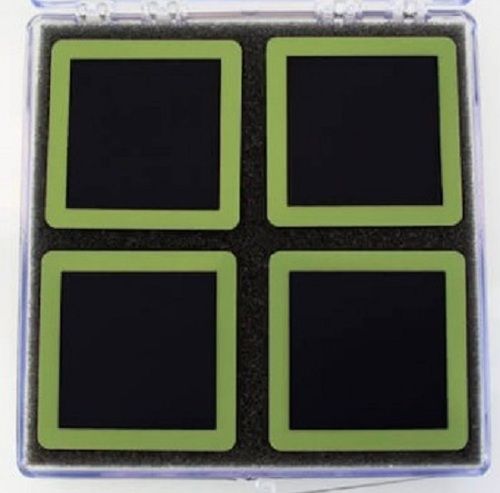
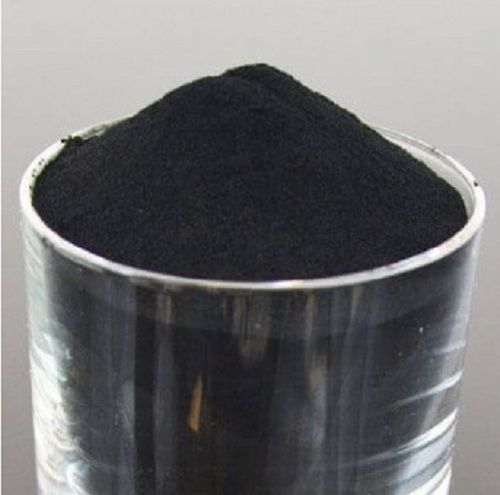
The Lanthanum Strontium Manganite (LSM) Cathode Ink is made using a high-quality LSM powder to provide an excellent cathode ink. It can be used to fabricateyour own cells, and can be used to enhance contact of your solid oxide fuel cell to the test manifold.

Technical Specifications:


Formulation: (La0.80Sr0.20)0.95MnO3-x
Solids Loading: 62 - 72% by weight


Typical Use Guidelines:

This is a great inkfor making cathode catalyst layers for SOFC applications.
Stirring the ink before use is highly recommended. For best results, the inkshould be stirred with a spatula or a glass rod to achieve an even consistencyprior to use.

For making cathode catalyst layers that are well bonded to the electrolyte: The ink applied electrolyte istypically sintered at 100oC (until it looks dry), then sintered at800C for 1 hr, and then at 1150oC for 1 hr.  If an anode catalyst layer is also going to be applied (which would require a much higher sintering temperature than the this cathode), then it is recommended that the anodecatalyst layer to be bonded to the electrolyte first.  Exposing thiscathode ink to sintering temperatures much higher than 1150C would cause thedensification of the catalyst layer or decomposition of the phase and hence,low performance.  

For making electrical connections to a screen or wire: This ink istypically fired at 750C or 850C for 1 hour to ensure adhesion prior totesting at the desired test temperature. The adhesion obtained at lowersintering temperatures would not be as good as the adhesion obtained with thecatalyst layer that is sintered at much higher temperatures.
This ink can be used for screen printing for generating electrical connectionsfor wire attachments.
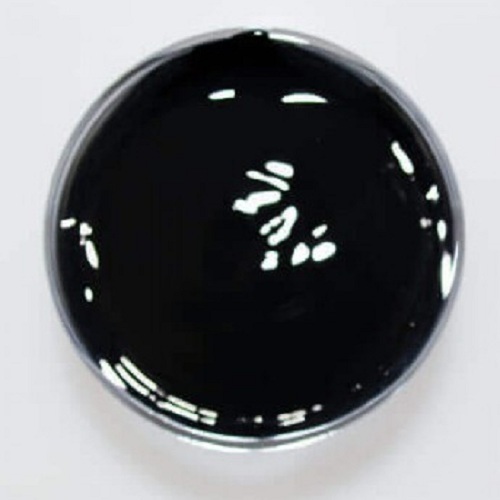


Precision Engineering for SOFC Cathodes

LSM20 Cathode Ink is engineered to provide superior electrochemical performance for SOFC systems. The formulation ensures high electronic conductivity and offers a stable thermal expansion coefficient, crucial for operational durability and compatibility with other cell components. Suitable for various cathode applications, it supports the production of efficient and long-lasting fuel cells.


Optimized for Screen Printing and Doctor Blade

This cathode ink comes as a ready-to-use paste with optimized viscosity, allowing seamless application via screen printing or doctor blade techniques. The fine particle size and homogeneous dispersion promote uniform coating, essential for achieving consistent results during cell fabrication. Both research and industrial environments benefit from its easy handling and reliable performance.

FAQs of Lanthanum Strontium Manganite Cathode Ink (LSM20):


Q: How should LSM20 Cathode Ink be stored to maintain its quality?

A: LSM20 Cathode Ink should be stored in a cool, dry place within airtight packaging. Proper storage ensures the ink maintains its stability and optimal performance throughout its 6-month shelf life from the date of manufacture.

Q: What is the recommended sintering process for this ink after application?

A: After applying the ink, it should be sintered at a temperature between 1200C and 1400C. This sintering range promotes optimal bonding and electrical conductivity for SOFC cathode layers.

Q: When is LSM20 Cathode Ink most suitable for use?

A: LSM20 Cathode Ink is ideal for use when fabricating cathode layers in solid oxide fuel cells (SOFCs), especially where high purity, precise thermal expansion, and reliable electrical conductivity are essential.

Q: Where can this product be sourced or distributed?

A: The ink is available for purchase through various channels in the United States, including distributors, manufacturers, suppliers, retailers, and traders. Customized packaging options can be requested to suit different project needs.

Q: What are the key benefits of using this cathode ink in SOFC applications?

A: Benefits include high electronic conductivity, verified chemical purity, a formulated ready-to-use paste for consistent application, and reliable thermal compatibility. These features contribute to better cell efficiency and long-term operational durability.

Q: How does the composition and binder system contribute to the inks application performance?

A: The fine particle size (<1 m) and organic polymer binder combined with terpineol solvent provide smooth application, excellent adhesion, and uniform layering, supporting robust cathode fabrication by either screen printing or doctor blade methods.

Q: What steps are involved in using this ink for SOFC cathode fabrication?

A: The typical process involves applying the ink to the substrate via screen printing or doctor blade, followed by drying and sintering at 1200C to 1400C to achieve conductive and durable cathode layers.

Tell us about your requirement
product

Price:

Quantity
Select Unit

  • 50
  • 100
  • 200
  • 250
  • 500
  • 1000+
Additional detail
Mobile number

Email

More Products in Solid Oxide Fuel Cell Components Category

Lanthanum Nickel Cobaltite Cathode Powder

Lanthanum Nickel Cobaltite Cathode Powder

Alloy : No

Chemical Composition : LaNi0.6Co0.4O3 or LaNi1xCoxO3 (Lanthanum Nickel Cobaltite)

Material : Lanthanum Nickel Cobaltite (perovskite oxide)

Color : Black or dark grey

Application : Other, Solid oxide fuel cells (SOFC), catalysis, electrode material
Purity : 99.9%

Gadolinium Doped Ceria (20% Gd) - Tape Cast Grade Powder

Gadolinium Doped Ceria (20% Gd) - Tape Cast Grade Powder

Alloy : No

Chemical Composition : CeO: ~80%, GdO: ~20% (mole%)

Material : Gadolinium Doped Ceria (Ce.Gd.O)

Color : Light Yellow / Pale Yellow

Application : Other, Solid oxide fuel cells (SOFC), Electrolytes, Catalysts, Membrane fabrication, Oxygen sensors

Purity : >99.9%

Anode Electrolyte Planar Bi-Layer - 5 x 5cm

Anode Electrolyte Planar Bi-Layer - 5 x 5cm

Alloy : No alloy; distinct advanced ceramic/metallic and solid electrolyte layers

Chemical Composition : Custom engineered anode layer + solid/state electrolyte layer

Material : Composite ceramic and solidstate electrolyte

Color : GreyWhite (bilayer visible)

Application : Other, Research, solidstate batteries, advanced electrochemical devices

Purity : 99.9% (Metallic Components)

Lanthanum Strontium Cobalt Ferrite Ink (LSCF6428)

Lanthanum Strontium Cobalt Ferrite Ink (LSCF6428)

Alloy : No

Chemical Composition : La0.6Sr0.4Co0.2Fe0.8O3 (Lanthanum Strontium Cobalt Ferrite)

Material : LSCF6428 perovskite oxide

Color : Black

Application : Other, SOFC cathodes, sensors, electronic ceramics, fuel cell devices

Purity : 99% (typical)