 Call Us : 08071781050


|
Brand: FuMA-Tech
Product Code: 5041614
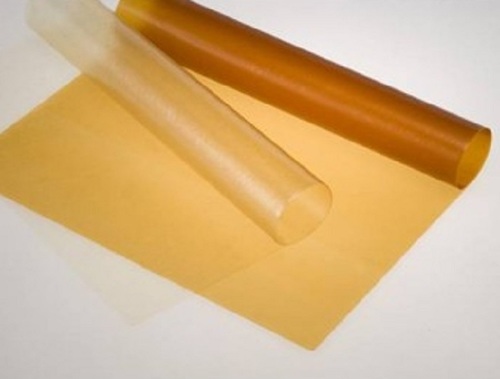
Fumasep FBM Bipolar Exchange Membrane with PKreinforcement consists of an anion exchange layer and a cationexchange layer manufactured using a patented multilayer-coating productiontechnology. The polymer backbone for this bipolar membrane is based onhydrocarbon polymer materials.
This composite membrane is chemically stable andmechanically reinforced with woven PEEK. In the intermediate layer betweenAnion Exchange Layer (AEL) and Cation Exchange Layer (CEL), water isdissociated into OH- and H+ ions when exceeding a potential difference ofapproximately 0.8 V. The CEL must be directed towards the cathode, the AEL mustbe directed towards the anode, and the mode of operation has to be reversebiased in order to promote the water dissociation reaction. Under thereverse biased mode, the electrons would be transferred from anode side tocathode side. Water molecules would naturally diffuse into theintermediate layer between AEL and CEL and generation of H+ and OH- ions wouldoccur as a result of water splitting reaction. H+ ions will diffuse outfrom the CEL layer and migrate into the cathode chamber. OH- ions, on theother hand, would diffuse out from the AEL layer and migrate into the anodechamber.
The Fumasep FBM membrane should not be operated underforward bias conditions which may cause blistering at the water dissociationlayer. Under forward biasing conditions, water generation reaction will takeplace at the intermediate layer instead of water splitting reaction. H+ions will diffuse into the CEL and OH- will diffuse into the AEL during forwardbiased operational mode and combination of these two ions at the intermediatelayer will create water and hence, accumulation of water will happen overtime. Depending on the duration of the forward biasing mode and currentdensity or voltage, the water that accumulates at the center would eventuallydamage the bipolar membrane irreversibly. If the membrane is used in thewrong position at high current density even for short term (specificallyreferring to forward bias scenario), the interim layer may degrade (blisteringor ballooning), and the monolayers may delaminate. Depending on theoperational parameters of the forward biasing, micro-tears or micro-cracks thatare invisible to the naked eye may form and initiate the cross-contamination ofthe electrolytes located in different compartments.
The electro-catalytically forced water dissociationproduces in contrast to the classical electrolysis of water no reactiongases. Therefore, one Mol of OH- and H+ ions can be achieved at an energyvalue of approximately 22 Wh (Electrolysis: approximately 55 Wh per Mol).
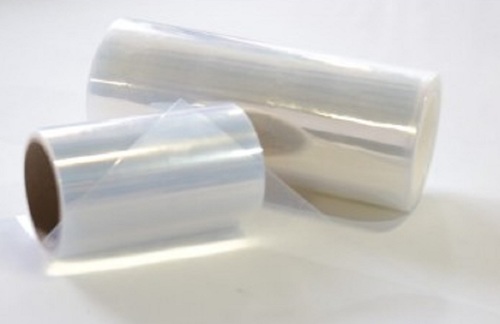
Fumasep FBM membrane comes in a 20cm x 30cm size sheet isdelivered in wet form.
Fumatech membranes are highly sensitive to differences inhumidity and moisture content. Therefore the membranes can vary +/- 0.5cm fromthe original cut sizes. Also due to this sensitivity the manufacturer expectswrinkles to form, however soaking the membranes in deionized water will returnthe membranes to the full size planar state according to the manufacturer.
Fumasep FBM membrane is Easy to Use and Show:
High watersplitting efficiency (> 98% at 100 mA cm-2 in 0.5 M NaCl at 25C)
Low water splitting voltage (< 1.2 V at 100 mA cm-2 in 0.5 M NaCl at25C)
Excellent mechanical properties at low thickness (0.13 0.16 mm)
Fumasep FBM Features:
Application: Salt Splitting
Bipolar Exchange Membrane
Stability range (pH) at 25 C: 1 - 14
Can withstand high caustic concentrations
Thickness: 200 - 250 micrometers (7.8 - 9.8 mil)
Size: 20cm x 30cm
Handling:
Please pay attention that the membrane surface is notcontaminated with surface active agents or will be damaged by mechanicalinfluence.
High attention must be given to theright polarity when using the membranes!
When mounting the membranes it is imperative that themembrane sides will not get mixed up. Therefore, the cation side is markedwith Cathode Side. This side must be directed towards the cathode(see also drawing overleaf).
Storage:
The membrane should be stored in 1 M NaCl-solution andplaced in a closed container. If storage will be for a longer period of time100 ppm of NaN3 should be added to prevent biological growth. Other biocideshave not been used as yet.
The membrane is not stable against chlorine (Cl2).
If you have any concerns before proceeding, please feelfree to contact us for further information.
Current Voltage Characteristics ofFumasep FBM:
4-chamber set-up: cathode Na2SO4 CEM NaCl FBM NaCl CEM Na2SO4 solution anode
4-probe measurement: Haber-Luggin capillary (3 M KCl) with Ag / AgCl referenceelectrodes
CEM: Cation exchange membrane FKB
Electrolyte loop: 0.5 M NaCl solution / recombined
Electrode loop: 0.25 M Na2SO4 / recombined
Temperature: 25C
Fixed scan rate, U = 20 mV, t = 20 S.

Price:
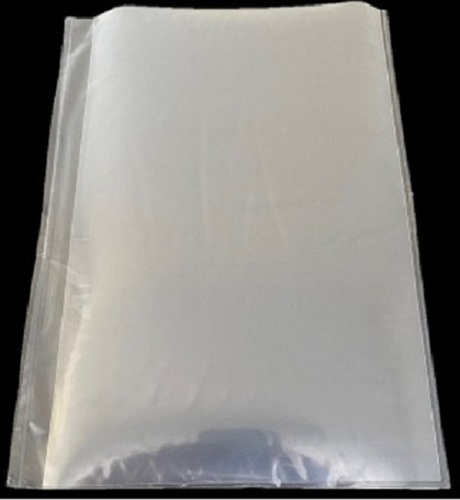
Chemical Composition : PBI Copolymer, Modified Aromatic Polymer with Ionic Groups
Shape : Membrane/Film
Application : PEM fuel cells, Electrolyzers, Hydrogen production, Chemical process industry membranes
Material : PBI Copolymer (Polybenzimidazole Copolymer)
Hardness : Shore D 4045
Density : 1.40 Gram per cubic centimeter(g/cm3)
Chemical Composition : Perfluorosulfonic acid (PFSA) ionomer
Shape : Bipolar Plate Membrane Sheet
Application : Electrochemical processes, Water electrolyzers, Fuel Cells, Hydrogen production
Material : Aquivion Ionomer Membrane
Hardness : Medium
Density : 2.1 Gram per cubic centimeter(g/cm3)
Chemical Composition : Perfluorosulfonic acid polymer
Shape : Sheet
Application : Electrochemical cell testing, Fuel cells, Electrolysis systems, Research and development
Material : Perfluorosulfonic acid (PFSA) membrane
Hardness : Medium
Density : 2.0 Gram per cubic centimeter(g/cm3)
Chemical Composition : Quaternized Poly(phenylene) with Reinforcement
Shape : Flat Sheet Membrane
Application : Electrochemical Devices, Alkaline Water Electrolysis, CO2 Electrolysis, Fuel Cells
Material : Polymer Electrolyte Membrane (PEM)
Hardness : Flexible
 |
ULTRANANOTECH PRIVATE LIMITED
All Rights Reserved.(Terms of Use) Developed and Managed by Infocom Network Private Limited. |




 Send Inquiry

 Send Inquiry
 Send Inquiry
 Send SMS