Call UsCall Us : 08071930855
Change Language
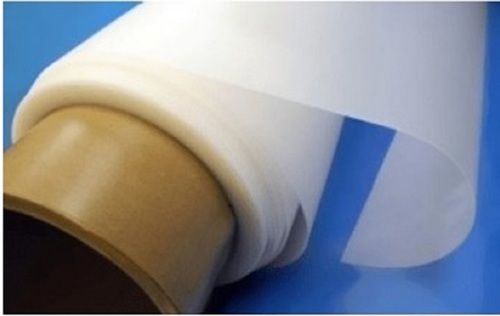
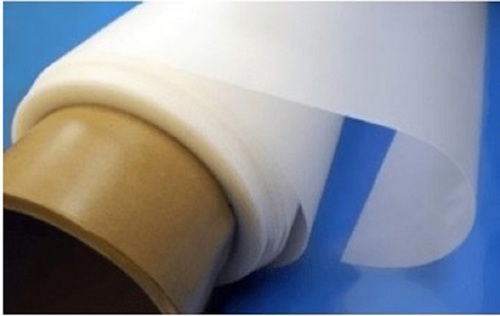
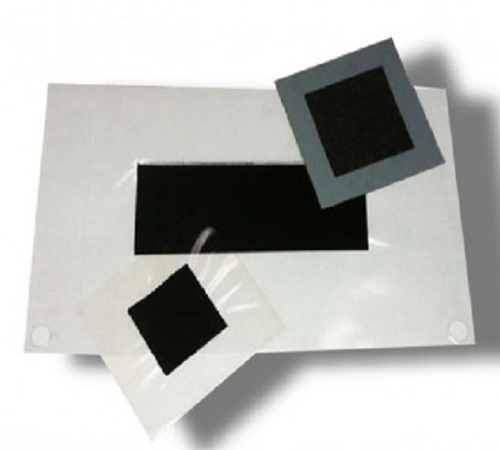
MEA PEM Dyneon 725 05I m 0.5mgPt Cloth

MEA PEM Dyneon 725 05I m 0.5mgPt Cloth

MEA PEM Dyneon 725 05I m 0.5mgPt Cloth Specification

  • Material
  • PEM (Proton Exchange Membrane) with Dyneon 725 and platinum catalyst on cloth backing
  • Application
  • Proton Exchange Membrane Fuel Cells (PEMFC), Hydrogen Electrolyzers, Electrochemical cells
  • Chemical Composition
  • Perfluorosulfonic acid membrane (Dyneon 725) with platinum catalyst (0.5 mg/cm) supported on carbon cloth
  • Shape
  • Sheet/Cloth
  • Hardness
  • Soft, flexible membrane
  • Density
  • 2.0 Gram per cubic centimeter(g/cm3)
  • Surface Finish
  • Smooth, micro-porous
  • Storage Conditions
  • Dry/cool environment, avoid direct UV exposure
  • Electrode Type
  • Membrane Electrode Assembly (MEA)
  • Ionic Conductivity
  • >0.1 S/cm (typical for Dyneon 725 membranes)
  • Membrane Area
  • Customizable, based on requirement
  • Operating Temperature
  • Up to 80°C
  • Catalyst Loading
  • 0.5 mg Pt/cm²
  • Gas Permeability
  • Low gas crossover
  • Reinforcement
  • Carbon cloth support
  • Thickness
  • 5 microns (0.005 mm)
 

MEA PEM Dyneon 725 05I m 0.5mgPt Cloth Trade Information

  • Payment Terms
  • Paypal
  • Delivery Time
  • 15 Days
  • Main Export Market(s)
  • Asia
  • Main Domestic Market
  • All India
 

About MEA PEM Dyneon 725 05I m 0.5mgPt Cloth

MEA PEM Dyneon-72505 0.5mg Pt Cloth

Product Code: 74810001


XICAT Membrane Electrode Assemblies (MEA) are highlydurable and they provide ultra-high performance assemblies for use inelectrochemical applications due to the use of ultra-thin composite membranes.


MEA PEM-Dyneon-725-05m-0.5mgPt-Cloth product iscomprised of the following sub-components: 5 micrometers thick PEM-Dyneon (EW725) composite membrane and carbon cloth based gas diffusion electrodes with0.5 mg/cm2 loading of 60% Pt/C catalysts both for anode andanode.

Xergy has the largest selection of composite protonexchange membranes (C-PEM) and proton exchange ionomers (PEI) and compositeanion exchange membranes (C-AEM) and anion exchange ionomers (AEI) to selectfrom for the XICAT MEA design. C-PEMs/PEIs for the XICAT MEAs are availablefrom Dyneon, Aquivion, and Nafion perfluorosulfonic acid (PFSA)ionomers.   C-AEMs/AEIs are available from Durion and Pentionionomers. The standard MEA is a 5-layer construction with a membrane sandwichedbetween a gas diffusion electrode and catalyst layer. A second MEA structure isa 3-layer construction known as a catalyst coated membrane (CCM), in which thecatalyst is applied directly to the membrane and there is no gas diffusionlayer. 


Advanced PEM Technology for Efficient Energy

Engineered with Dyneon 725 perfluorosulfonic acid membrane and platinum catalyst, this MEA delivers superior ionic conductivity and minimal gas crossover. Its carbon cloth reinforcement ensures durability while maintaining flexibility, making it ideal for next-generation PEM fuel cells and electrolyzer systems requiring consistent performance and reliable operation.


Customizable Membrane Area for Versatile Applications

Membrane area can be tailored according to user requirements, making it suitable for both research and large-scale systems. Whether for hydrogen generation, fuel cell stacks, or custom electrochemical setups, this product provides adaptable solutions to meet diverse energy and research demands with precision.

FAQ's of MEA PEM Dyneon 725 05I14m 0.5mgPt Cloth:


Q: How can the membrane area of the MEA PEM Dyneon 725 cloth be customized for specific needs?

A: The membrane area is customizable based on user specifications. Customers can specify desired dimensions when ordering to suit unique experimental setups or commercial fuel cell stack requirements, ensuring optimal integration and performance.

Q: What are the key benefits of using the Dyneon 725 05m 0.5mgPt cloth in PEM fuel cells and electrolyzers?

A: This MEA offers excellent ionic conductivity (>0.1 S/cm), low gas permeability, and robust mechanical reinforcement from carbon cloth, providing enhanced efficiency, stability, and reduced gas crossover for high-performance PEM fuel cells and hydrogen electrolyzers.

Q: When and how should the MEA PEM Dyneon 725 membrane be stored for longevity?

A: To preserve membrane integrity and performance, store the MEA in a dry, cool environment and avoid direct UV exposure. Proper storage ensures its catalytic and conductive properties remain optimal over time.

Q: Where is the MEA PEM Dyneon 725 0.5mgPt cloth available for distribution and purchase in India?

A: The MEA PEM Dyneon 725 05m 0.5mgPt cloth is available through distributors, manufacturers, suppliers, traders, and retailers across India, catering to academic, industrial, and research sectors.

Q: What is the process of integrating the MEA PEM Dyneon 725 cloth into a fuel cell or electrolyzer system?

A: Integration involves placing the MEA between flow plates and gaskets within the system structure. Its flexible, sheet-like nature and customizable sizing enable straightforward assembly compatible with standard PEMFC and electrolyzer configurations.

Q: What is the typical usage of the MEA PEM Dyneon 725 cloth and what applications does it support?

A: It is primarily used for Proton Exchange Membrane Fuel Cells (PEMFC), hydrogen electrolyzers, and various electrochemical cells. Its properties suit both small-scale research and commercial energy systems requiring reliable and efficient proton conduction.

Q: How does the carbon cloth reinforcement benefit the overall mechanical properties of the membrane?

A: Carbon cloth serves as a robust backing, enhancing flexibility and mechanical strength. This reinforcement ensures better handling during assembly, increased durability under operational stresses, and extended service life of the membrane within energy systems.

Tell us about your requirement
product

Price:

Quantity
Select Unit

  • 50
  • 100
  • 200
  • 250
  • 500
  • 1000+
Additional detail
Mobile number

Email

More Products in Fuel Cell Membranes Category

Nafion    R-1000 Precursor Beads

Nafion R-1000 Precursor Beads

Shape : Spherical beads

Application : Used as a precursor for manufacturing Nafion membranes and films via extrusion or casting; also for research and industrial ionexchange processes

Material : Perfluorosulfonic acid/PTFE copolymer precursor

Density : 2.1 Gram per cubic centimeter(g/cm3)

Chemical Composition : Polytetrafluoroethylene (PTFE) backbone with perfluorosulfonyl fluoride side chains

Hardness : High mechanical strength, typical for PTFE polymers

Pention-AEM-72-05-15 Crosslinking

Pention-AEM-72-05-15 Crosslinking

Shape : Sheets/strips

Application : Crosslinking agent for automotive and industrial rubber parts

Material : AEM (Ethylene Acrylate Rubber)

Density : 1.25 Gram per cubic centimeter(g/cm3)

Chemical Composition : Ethylene acrylate copolymer with crosslinking agent

Hardness : 72 Shore A

Fumasep FBM - Bipolar Membrane

Fumasep FBM - Bipolar Membrane

Shape : Flat sheet membrane

Application : Electrodialysis, electrolysis, redox flow batteries, acid and base generation

Material : Advanced polymer blend with ionselective properties

Density : 1.1 Gram per cubic centimeter(g/cm3)

Chemical Composition : Proprietary layered membrane structure with cation and anion exchange layers

Hardness : Flexible, nonrigid

Aquivion PW79S

Aquivion PW79S

Shape : Granular Powder

Application : Proton Exchange Membranes, Fuel Cells, Electrolysis, Chloralkali Applications

Material : Perfluorosulfonic Acid (PFSA) Ionomer

Density : 2.0 Gram per cubic centimeter(g/cm3)

Chemical Composition : Equivalent Weight (EW) 790 g/eq, Sulfonic Acid Groups

Hardness : Not Applicable (Powder form)